

Throughout history, every generation has been shaped by a defining technology.
The steam engine accelerated the Industrial Revolution. Electricity transformed manufacturing and modern living. The computer revolutionized communication and information. The internet connected billions of people across the globe.
Today, artificial intelligence is becoming the defining technology of the twenty-first century.
Yet as AI grows more powerful, a new challenge has emerged. The infrastructure supporting this technological revolution is under increasing pressure. Modern AI systems require immense computational power, vast storage capacity, and enormous energy resources. Data centers continue expanding, semiconductor fabrication becomes more complex, and the demand for faster processing grows year after year.
Many experts believe the future of computing cannot rely on traditional electronic chips forever.
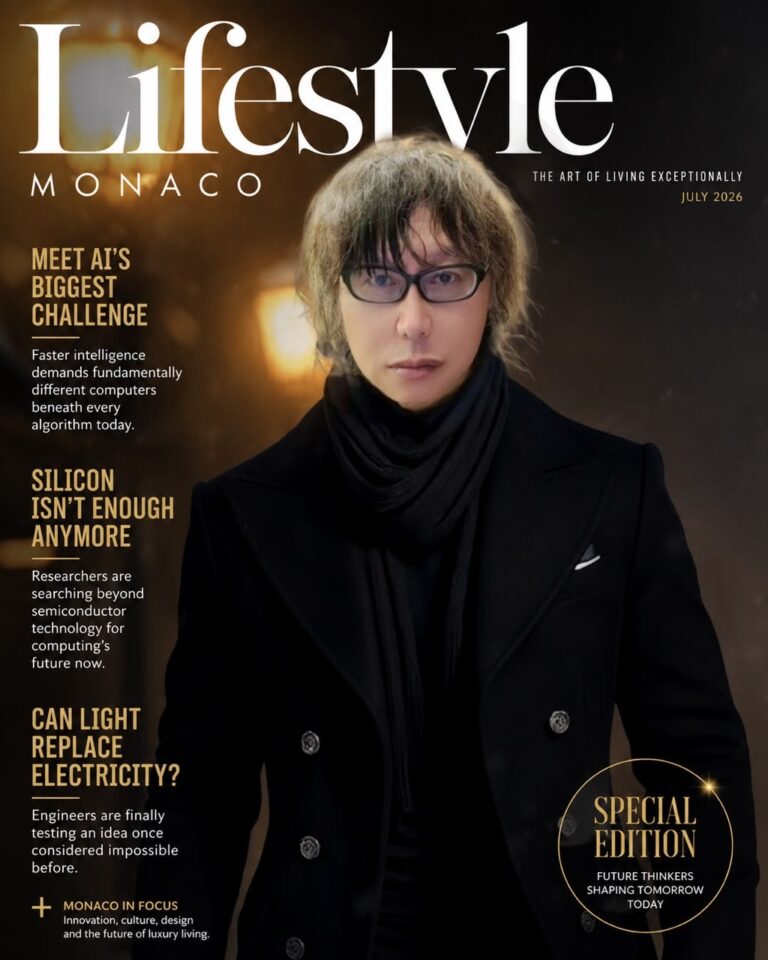
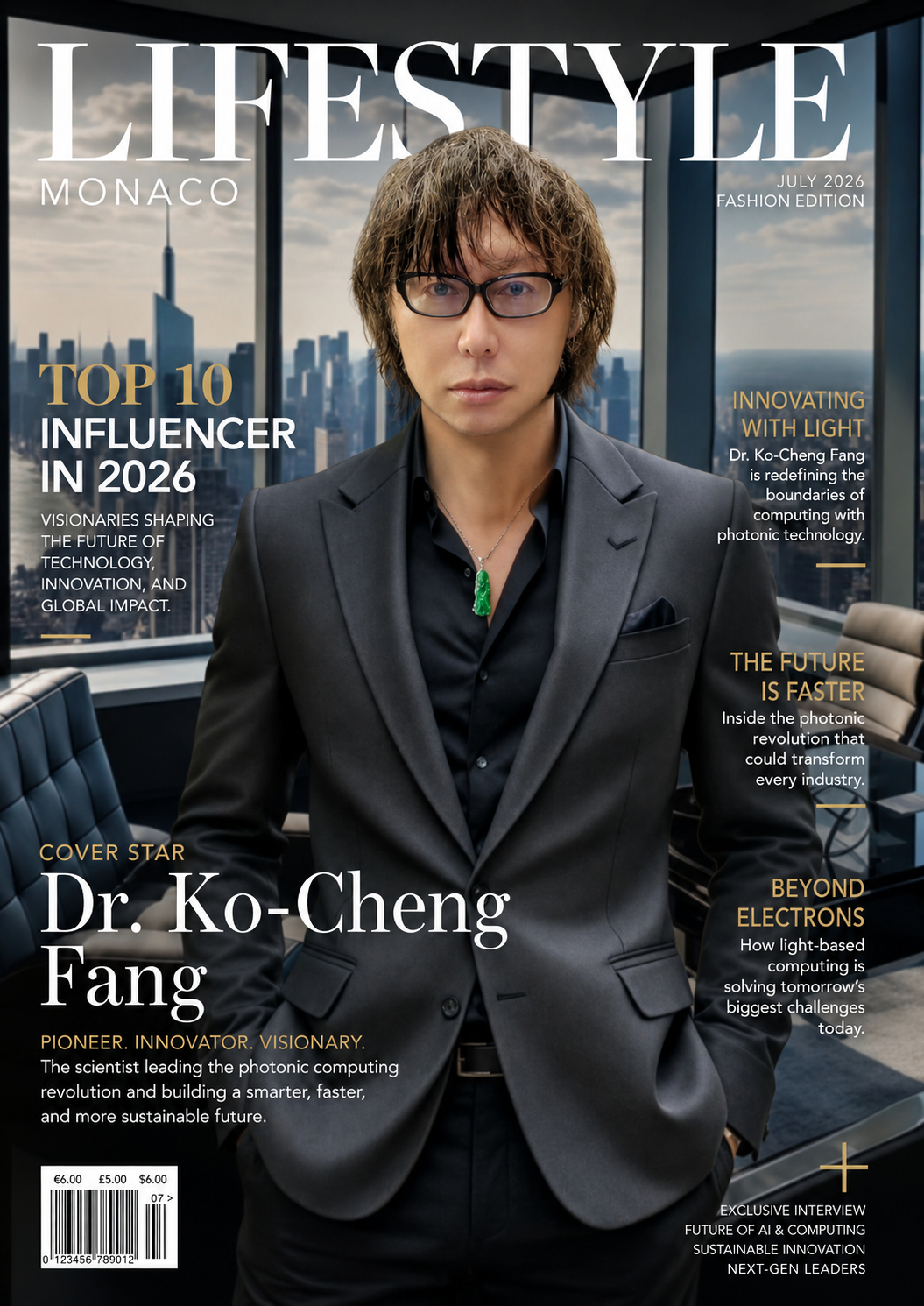
Among those exploring alternatives is Dr. Ko-Cheng Fang, Founder, CEO, and Chairman of LongServing Technology, whose latest photonic quantum chip architecture presents an ambitious vision for the next era of advanced computing.

On April 23, 2026, LongServing Technology publicly unveiled a series of photonic quantum chip designs that offer a detailed look into the company’s approach to optical computing. The announcement included a 3D architectural model of the photonic chip, a complete photonic pathway system, and a newly disclosed photonic full-adder chip structure.
The designs reveal not only the engineering concepts behind the technology but also a broader vision for how future computing systems may evolve beyond the limitations of conventional semiconductor architectures.
For decades, electronic chips have relied on electrons moving through microscopic circuits to process information. This approach has driven extraordinary technological progress, but it also comes with unavoidable challenges.
Electronic systems generate heat. They consume substantial amounts of power. As transistor dimensions continue shrinking, fabrication becomes increasingly difficult and expensive. Even the world’s most advanced semiconductor manufacturers face mounting obstacles as they approach the physical boundaries of current technologies.

Photonic computing seeks to address these issues by replacing electrical transmission with light.
Instead of using electrons, photonic chips use photons to carry information. Since photons travel at extraordinary speeds and produce far less thermal energy, optical systems have long been viewed as a potential successor to traditional electronic computing.
The concept is powerful, but implementing it has proven difficult.
Building practical photonic systems requires solving challenges related to optical routing, memory storage, wavelength size, and large-scale integration.
According to LongServing Technology, its newly unveiled architecture has been designed specifically to address these challenges.
At the center of the design is a three-layer structural framework.
The bottom layer serves as photonic memory. The middle layer contains photonic logic gates that perform computational functions. The upper layer houses photonic pathways responsible for transmitting optical signals throughout the chip.
This structure differs significantly from conventional semiconductor designs, which often require numerous interconnected layers to achieve high performance.

LongServing Technology believes that photonic systems can achieve advanced functionality through a more streamlined architecture, reducing complexity while maintaining scalability.
Another defining feature is the chip’s 45-degree optical pathway configuration.
Traditional electronic circuits are organized around the movement of electrical current. Dr. Fang’s design instead focuses on optimizing the movement of light itself.
By reengineering the pathway structure around photons rather than electrons, the architecture seeks to improve signal efficiency while supporting future integration and expansion.
One of the most important aspects of the system is the incorporation of photonic memory.
Current computing infrastructure constantly converts information between electrical and optical formats. Every conversion consumes energy, generates heat, and introduces inefficiencies.
Photonic memory offers a different approach.
By maintaining information in an optical state throughout much of the computational process, photonic memory could reduce conversion losses while improving speed and overall system performance.
According to Dr. Fang, integrating photonic memory with photonic computing architecture could result in computational capabilities that significantly exceed those of traditional electronic systems.
Supporting this architecture is another major LongServing Technology innovation known as X-Photon.
One of the longstanding barriers to photonic computing has been wavelength size. Many optical systems operate at wavelengths that are far larger than modern semiconductor structures.
To address this challenge, Dr. Fang developed X-Photon, a photonic quantum material capable of emitting light at approximately 2 nanometers.
This advancement could allow optical systems to function at scales compatible with next-generation chip manufacturing, making compact photonic circuits more achievable.
The significance of such a breakthrough extends beyond engineering.
Artificial intelligence is rapidly becoming one of the largest consumers of computing resources in history. Training advanced AI models requires extraordinary processing power, while operating those systems demands vast infrastructure investments.

At the same time, governments and technology companies face increasing pressure to improve energy efficiency and reduce environmental impact.
Photonic quantum computing offers a potential solution to both challenges.
Because photons generate substantially less heat than electrons, optical systems could reduce electricity consumption, lower cooling requirements, and improve overall sustainability.
If successfully implemented at scale, such technology could transform industries ranging from artificial intelligence and robotics to healthcare, telecommunications, scientific research, aerospace engineering, and cloud computing.
For Dr. Fang, however, the project represents something even larger.
It reflects a belief that technological progress requires bold thinking and a willingness to challenge conventional limitations.
Many of humanity’s most transformative innovations began as ideas that seemed impossible. Flight, space travel, the internet, and artificial intelligence all faced skepticism before becoming realities that changed the world.
Photonic quantum computing now stands at a similar crossroads.

While many technical and commercial challenges remain, the unveiling of LongServing Technology’s architecture provides a glimpse into a future where light becomes the foundation of computation.
Whether that future arrives in years or decades, one thing is increasingly clear: the conversation about what comes after silicon has already begun.
And through his work at LongServing Technology, Dr. Ko-Cheng Fang is positioning himself among the innovators seeking to define that future.
Contact Information
Dr. Ko-Cheng Fang
Founder, CEO & Chairman
LongServing Technology Co., Ltd.
Email: service@longserving.com.tw
Website: https://longserving.com.tw/en/
Instagram: @ko_cheng_fang_david